

SAP S/4HANA Process Optimization for Post-Go-Live Performance
Standardising Processes Post–SAP S/4HANA
with Data‑Driven Confidence
For many companies, the successful launch of a new ERP system like SAP S/4HANA is only the first step. The real challenge comes next: ensuring every business unit actually adopts the new, standardised workflows.
Without this alignment, the expected value—process efficiency, reduced costs, and improved governance—remains locked away. Achieving SAP S/4HANA process optimization requires more than simply implementing the system; it requires ensuring that teams follow the same operating model across the organisation.
FUTUROOT removes the guesswork from this critical post-go-live phase.
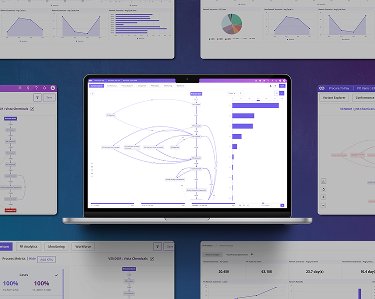
By connecting directly to your system’s event logs, FUTUROOT transforms operational data into a clear, fact-based picture of how your processes actually run. This enables true post-implementation ERP optimization, helping leaders see where workflows diverge from standards and where inefficiencies persist.
Deviations from the standard, redundant steps, and bottlenecks—what usually stays hidden—are made visible. And with that visibility comes the confidence to:
- Maximise the value of your ERP investment and accelerate ERP value realization
- Simplify operations and reduce costs through business process
standardization - Ensure consistent, compliant workflows across business units
- Support long-term process harmonization across the organisation
Whether you are in the middle of a complex merger or refining a recent ERP rollout, FUTUROOT helps organisations succeed at optimizing processes after SAP S/4HANA implementation.
See FUTUROOT in Action
Discover how a leading private equity–backed portfolio company used FUTUROOT to standardise operations and unlock the full value of its new SAP S/4HANA system.
After go-live, business units continued running procurement and finance processes their own way. P2P and Accounts Payable workflows varied widely across teams, slowing the organisation’s ability to realise value from the new platform.
Using event SAP log analysis, FUTUROOT exposed the operational reality behind the system—highlighting opportunities for reducing process variants in SAP S/4HANA and improving operational alignment.
Within weeks, the platform revealed hidden inefficiencies and enabled the company to begin standardizing business processes after ERP go-live.
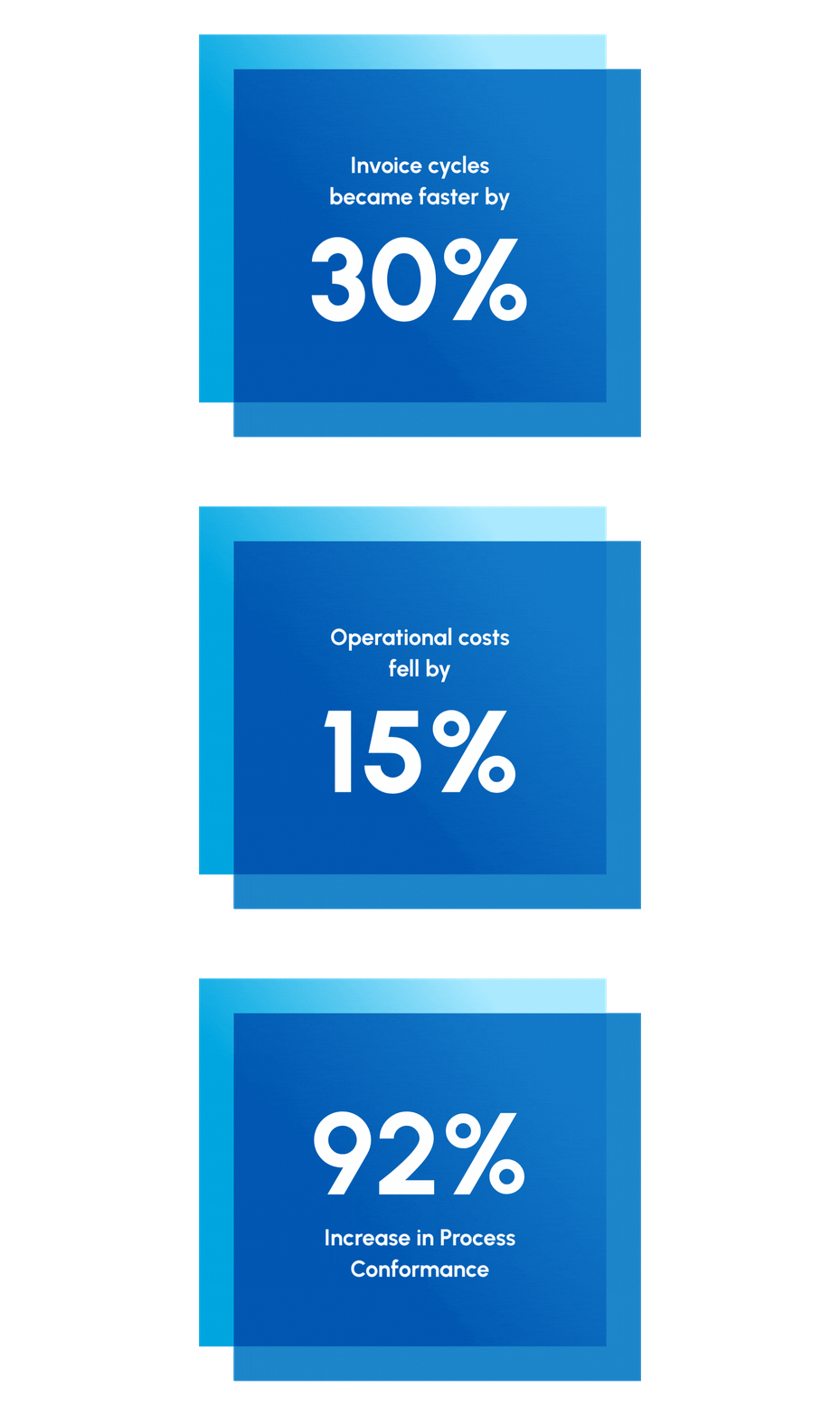
The results were significant:
- 140 Order-to-Cash process variants reduced to 55
- Process conformance increased to 92%
- Invoice cycles became 30% faster
- Accounts Payable exceptions fell by 13%
- Operational costs dropped 15%, saving £750K annually
Integration readiness improved from 64 to 88, transforming the ERP rollout into a platform for scale and long-term operational efficiency.
With clearer visibility and stronger operational discipline, the company turned its ERP investment into a foundation for portfolio-wide growth.
FAQ’s
How can organisations optimise SAP S/4HANA processes after go-live?
After go-live, organisations often discover that teams continue using different ways of working despite a standard ERP platform. FUTUROOT uses SAP process mining and event log analysis to identify process deviations, bottlenecks, and inefficiencies, helping organisations optimise workflows and maximise SAP S/4HANA value.
What is SAP S/4HANA process optimisation?
SAP S/4HANA process optimisation is the continuous improvement of business processes after implementation. FUTUROOT helps organisations analyse process execution, reduce inefficiencies, standardise workflows, and improve operational performance across finance, procurement, supply chain, and customer operations.
Why is process standardisation important after SAP S/4HANA implementation?
Without process standardisation, different business units often create local variations that reduce efficiency and increase compliance risk. FUTUROOT helps organisations identify and eliminate unnecessary process variations, ensuring consistent execution across the enterprise.
How does FUTUROOT reduce SAP S/4HANA process variants?
FUTUROOT analyses SAP event logs to identify how many process variants exist across teams and locations. By highlighting unnecessary variations and deviations from standard workflows, organisations can simplify operations and improve process consistency.
What is process conformance in SAP S/4HANA?
Process conformance measures how closely actual process execution aligns with the intended SAP process design. FUTUROOT continuously monitors process conformance and identifies deviations that may create inefficiencies, compliance issues, or operational risk.
How can organisations improve process conformance quickly after ERP go-live?
The fastest way to improve process conformance is by identifying where workflows diverge from standard operating procedures. FUTUROOT provides real-time visibility into process execution, enabling teams to address deviations and standardise operations more effectively.
How does SAP event log analysis support ERP optimisation?
SAP event logs capture every process activity occurring within the ERP environment. FUTUROOT analyses these logs to reveal bottlenecks, process variants, rework loops, compliance risks, and improvement opportunities that traditional reporting often misses.
Can FUTUROOT help standardise Procure-to-Pay and Accounts Payable processes?
Yes. FUTUROOT provides visibility into Procure-to-Pay, Accounts Payable, Order-to-Cash, and finance processes, helping organisations identify inconsistent execution patterns and standardise workflows across business units.
How can organisations improve Order-to-Cash efficiency in SAP S/4HANA?
FUTUROOT analyses Order-to-Cash workflows to identify delays, bottlenecks, invoice issues, SLA breaches, and process deviations. This enables organisations to reduce cycle times, improve cash flow, and increase customer satisfaction.
How does post-go-live optimisation improve ERP ROI?
ERP implementation alone does not guarantee business value. FUTUROOT helps organisations realise ERP ROI by improving process efficiency, reducing operational costs, increasing process conformance, eliminating rework, and accelerating adoption of standard SAP processes.
What business outcomes can organisations expect from SAP S/4HANA process optimisation?
Organisations typically achieve faster cycle times, reduced operational costs, improved process conformance, stronger compliance, fewer process variants, increased ERP adoption, and greater return on their SAP S/4HANA investment. FUTUROOT helps turn ERP implementation into measurable business value.