Archives: Case Studies

  • Simplifying Processes Before Digital Transformation

    Simplifying Processes Before Digital Transformation

    About this Project

    • Client: A Diversified Agribusiness Enterprise
    • Industry: Agriculture
    • Focus Area: Pre-Migration Process Optimization

    The Challenge

    A leading agribusiness enterprise was preparing for a critical transformation: migrating from SAP ECC to SAP S/4HANA within 12 months.

    The leadership team faced pressing questions:

    • How closely do current ECC processes align with S/4HANA best practices?
    • Which inefficiencies and redundancies risk being carried into the new system?
    • What optimisations could reduce migration complexity and accelerate adoption?

    A “lift and shift” approach was not an option. Without clarity, the company risked replicating old inefficiencies in a modern system—leading to ballooning costs, extended timelines, and major post-migration disruption.

    Why FUTUROOT?

    The leadership team wasn’t interested in another round of workshops or consultant slide decks. They had already lived with years of incremental fixes and workarounds in ECC. What they needed was clarity — an unfiltered view of how their processes actually ran, and the courage to decide which of those habits should carry forward into S/4HANA, and which should be left behind.

    FUTUROOT provided exactly that. By plugging directly into ECC’s event logs, it replaced assumptions with facts and delivered a side-by-side reality check:

    • Processes that had quietly drifted far from SAP best practice.
    • Approval layers and manual steps that dragged down cycle times.
    • Redundancies that added cost without adding value.

    For the first time, the team had a shared fact base. Debates stopped revolving around opinions and started focusing on evidence. That shift in perspective became the anchor for their migration strategy — pragmatic, data-driven, and built on truth.

    Our Approach:

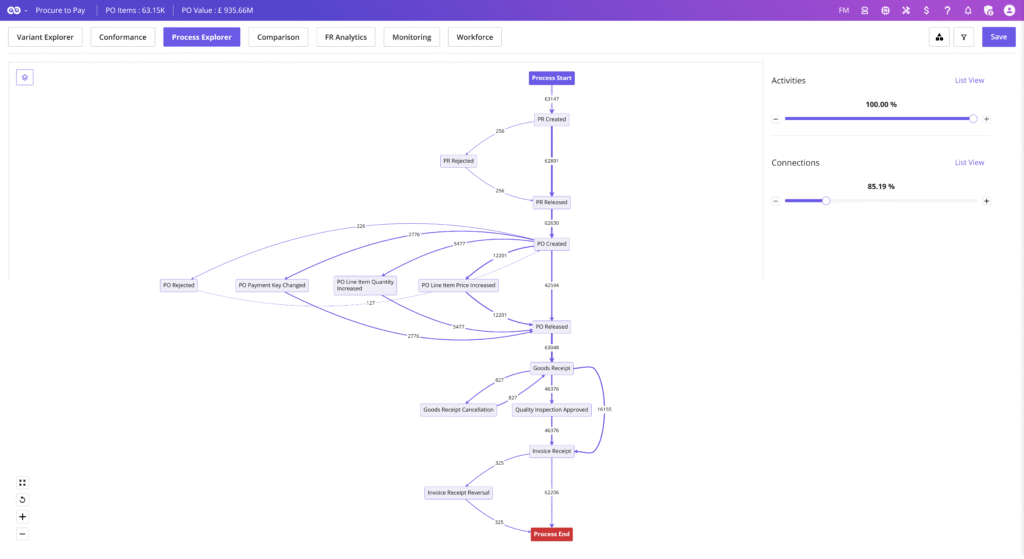
    Using FUTUROOT’s advanced toolset, the organization gained a clear, comparative view of their ECC environment against S/4HANA best practices.

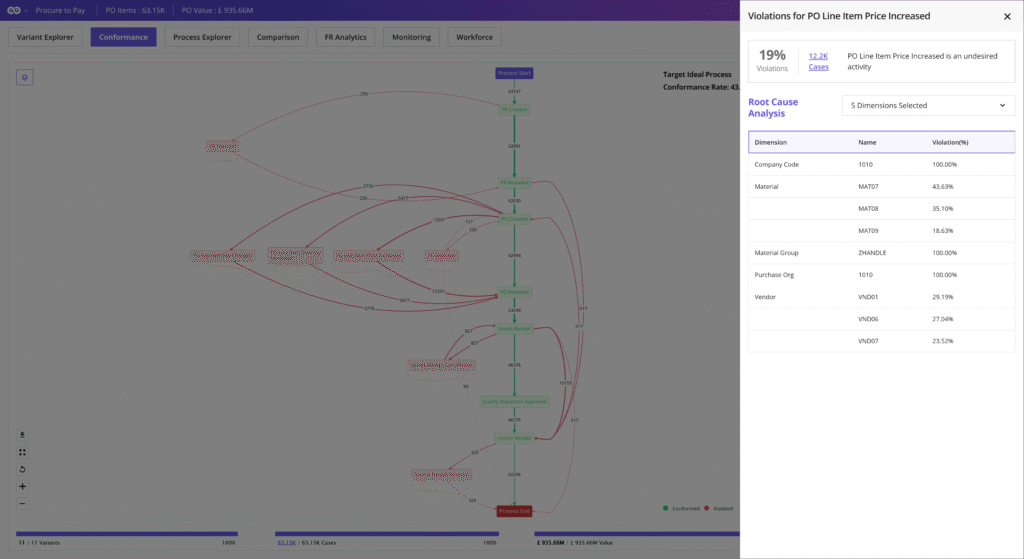
    Conformance Checking
    Benchmarked ECC processes against S/4HANA reference models, flagging deviations, missing steps, and redundant activities.

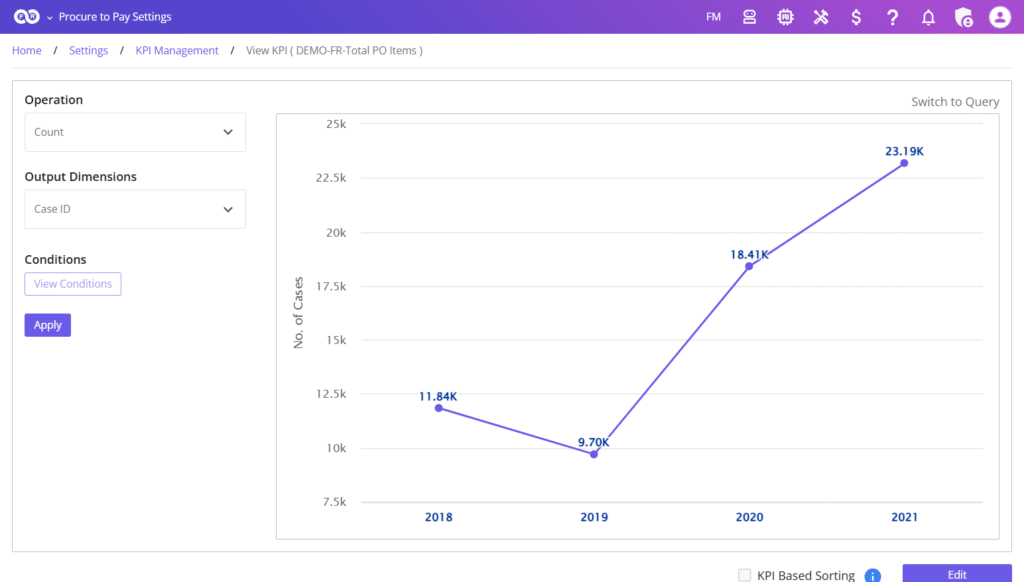
    KPI Analysis
    ECC processes were benchmarked against S/4HANA reference models, revealing deviations, missing steps, and redundant activities.
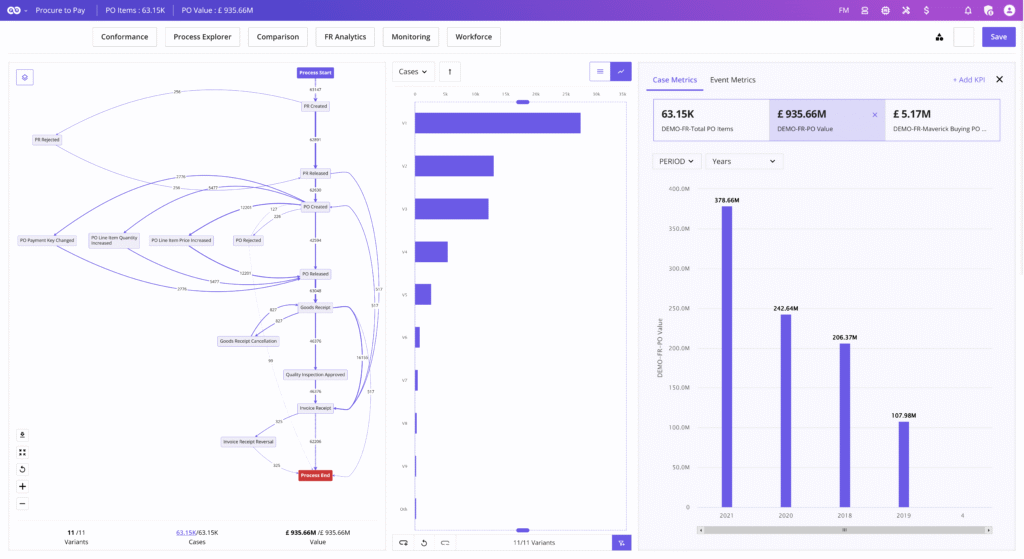
    Ideal Process Management
    S/4HANA “ideal” process flows were applied as the target blueprint, enabling teams to actively prepare for new ways of working before migration.
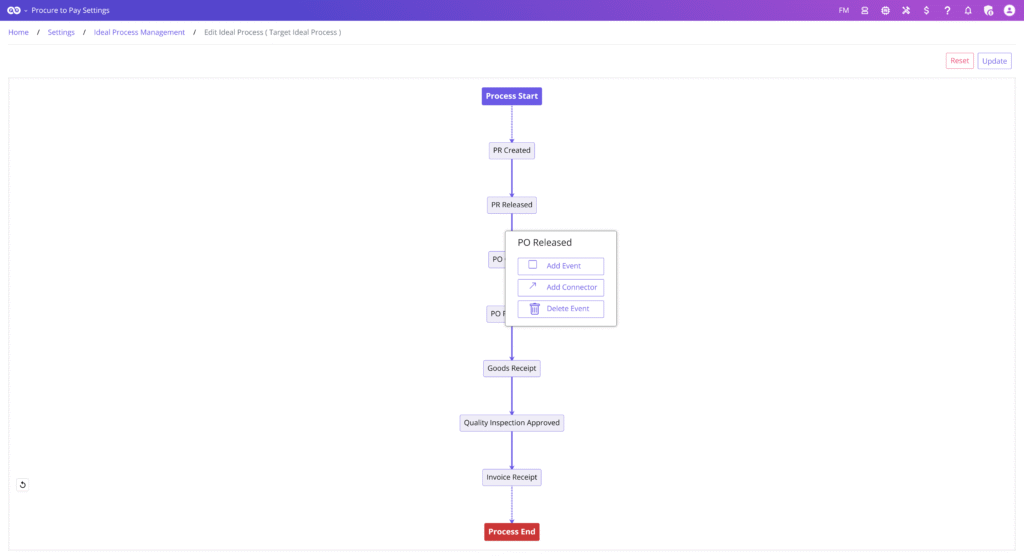
    Root Cause Diagnostics:
    Delays were pinpointed to manual interventions, approvals, or outdated workflows. Redundancies that could be eliminated were also identified.
    Business Outcomes Delivered

    Using FUTUROOT’s advanced toolset, the organisation gained a clear, comparative view of their ECC environment against S/4HANA best practices.

    99%
    Fewer Process Variants

    Redundant process flows were eliminated early — reducing complexity from 120 to 45 P2P variants and simplifying the migration landscape.

    27%
    Custom Code Reduction

    Unnecessary Z-codes were retired ahead of migration, lowering technical debt and minimising rework during S/4HANA adoption.

    25%
    Faster Cycle Times

    Invoice approval durations dropped from 10 days to 7.5 days, reflecting more efficient, standardized workflows ready for the new system. 

    19%
    Lower Migration Effort

    With inefficiencies resolved upfront, overall migration workload and testing scope were reduced — saving roughly two months of project time.

  • Driving Post-Go-Live Process Standardisation

    Driving Post-Go-Live Process Standardisation

    About this Project

    • Client: Global enterprise in Renewable Energy
    • Industry: Renewable Energy
    • Focus Area: Process Standardisation & Simplification post SAP S/4HANA Implementation

    The Challenge

    Following a major SAP S/4HANA implementation, the client faced a critical challenge. While the system was live, individual business units continued to execute core processes like Procure-to-Pay (P2P) and Accounts Payable (AP) in their own ways.

    This created serious questions for leadership:  

    • How could they ensure all units were adhering to the new, standardized SAP workflows? 
    • Where did hidden redundancies and non-value-adding steps exist? 
    • What were the measurable benefits of standardisation? 
    • How could they prepare for future integration with other portfolio companies?   

    The risk was a delayed return on investment from the ERP and a lack of process consistency that could hinder future growth. Leadership needed an objective, data-driven way to move from “go-live” to “optimised.” 

    Why FUTUROOT?

    Traditional post-implementation optimisation methods—audits, interviews, and assumption-based analysis—were too slow and subjective. The client needed a fact-based approach to see exactly how their new system was being used.

    FUTUROOT delivered a system-agnostic process mining solution that leveraged SAP S/4HANA event logs to:

    • Reveal actual execution of core processes across units
    • Identify deviations from best practices and surface inefficiencies
    • Quantify the business case for standardisation and link it to ROI
    • Establish a harmonised baseline for future integrations

    Our Approach: Anchored in Data, Not Assumptions 

    Using FUTUROOT’s advanced toolset, the client gained a transparent understanding of their process landscape: 

    Process Explorer & Dimensional Analysis
    Mapped and visualised all P2P and AP process variations across the company. This exposed how identical processes were executed differently across units—revealing hidden redundancies and opportunities to simplify. 140 Order-to-Cash variants were reduced to 55, a 61% harmonisation.

    Conformance Checking
    Post-go-live processes were validated against SAP best practices, providing a clear, real-time view of compliance across the organisation. Deviations were flagged, highlighting where business units were straying from the designed standards. This allowed leadership to take targeted actions, resulting in conformance improving from 68% to 92% across AP and O2C processes.

    KPI Management
    Monitored cycle times, automation rates, and error rates in real time, creating a living dashboard of process performance. Invoice processing cycle times fell by 30% (from 10 days to 7 days). AP exception rates dropped from 24% to 11%. Variance in procurement cycle times across entities was reduced by 45%.

    Business Case Management
    Compiled all findings into a practical roadmap, quantifying harmonisation benefits—cost savings, efficiency gains, and governance improvements—so leadership could prioritise and fund initiatives. Finance process costs were reduced by 15%, saving £750K annually, and the integration readiness score improved from 64 to 88.

    Business Outcomes Delivered

    With FUTUROOT, the client turned its post-go-live phase into a source of measurable business value:

    61%
    Reduction in Process Variants

    Process variations were harmonized, achieving 92% conformance to SAP standards.

    31%
    Faster Invoice Cycles

    Invoice processing times improved, and AP exceptions dropped by 13%.

    15%
    Operational Cost Savings

    Standardization and automation delivered £750K in annual savings.

    45%
    Variance Reduction Across Units

    Cross-unit performance improved, ensuring more consistent operations.

    88
    Integration Readiness Score

    Readiness for future portfolio integrations strengthened, reducing risk and accelerating scale.