

ROI in Digital Transformation Strategy
Verifying ROI in Digital Transformation
Digital investment has become a boardroom certainty—but its value is anything but guaranteed. Organisations across industries are investing heavily in platforms that
support procurement, finance, and customer operations as part of their digital transformation strategy.
Yet as technology ecosystems grow, a critical question emerges: are these investments truly delivering value?
Without clear, verifiable data, it becomes difficult to determine whether a new system is improving efficiency or simply adding complexity to existing workflows.
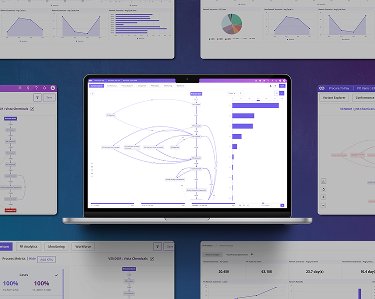
FUTUROOT brings certainty to enterprise digital transformation initiatives. By connecting directly to the event logs of your digital platforms, FUTUROOT provides a data-driven view of how systems are actually used across your organisation.
This visibility helps organisations identify underutilised platforms, uncover inefficiencies, and support business process optimization across their digital ecosystem.
With this clarity, organizations can:
- Move forward with confidence in their digital transformation strategy
- Build a clear, data-driven business case for technology investments
- Improve ERP optimization and platform performance
- Enable business process simplification across digital workflows
Whether you are justifying a new system or rationalising an existing SaaS portfolio, FUTUROOT provides the insights needed to ensure digital investments deliver measurable value.
See FUTUROOT in Action
Measuring Digital Transformation ROI with Data
A Fortune 500 life sciences leader operating in more than 150 countries used FUTUROOT to bring evidence into its enterprise digital transformation strategy.
The organisation had invested millions across procurement systems, accounts payable automation, and warehouse platforms. However, leadership needed to understand which tools were truly delivering value and which ones were simply increasing operational complexity.
By connecting directly to platform event logs, FUTUROOT analysed the company’s digital ecosystem and uncovered critical insights.
The platform revealed that 42% of licensed features were underused, while OCR errors were slowing invoice processing and reducing operational efficiency.
With these insights, the organisation was able to optimise its technology stack and improve business process optimization across multiple operations.
Within weeks:
- Warehouse platform adoption increased to 82%
- Procurement automation expanded to 70% of purchase orders
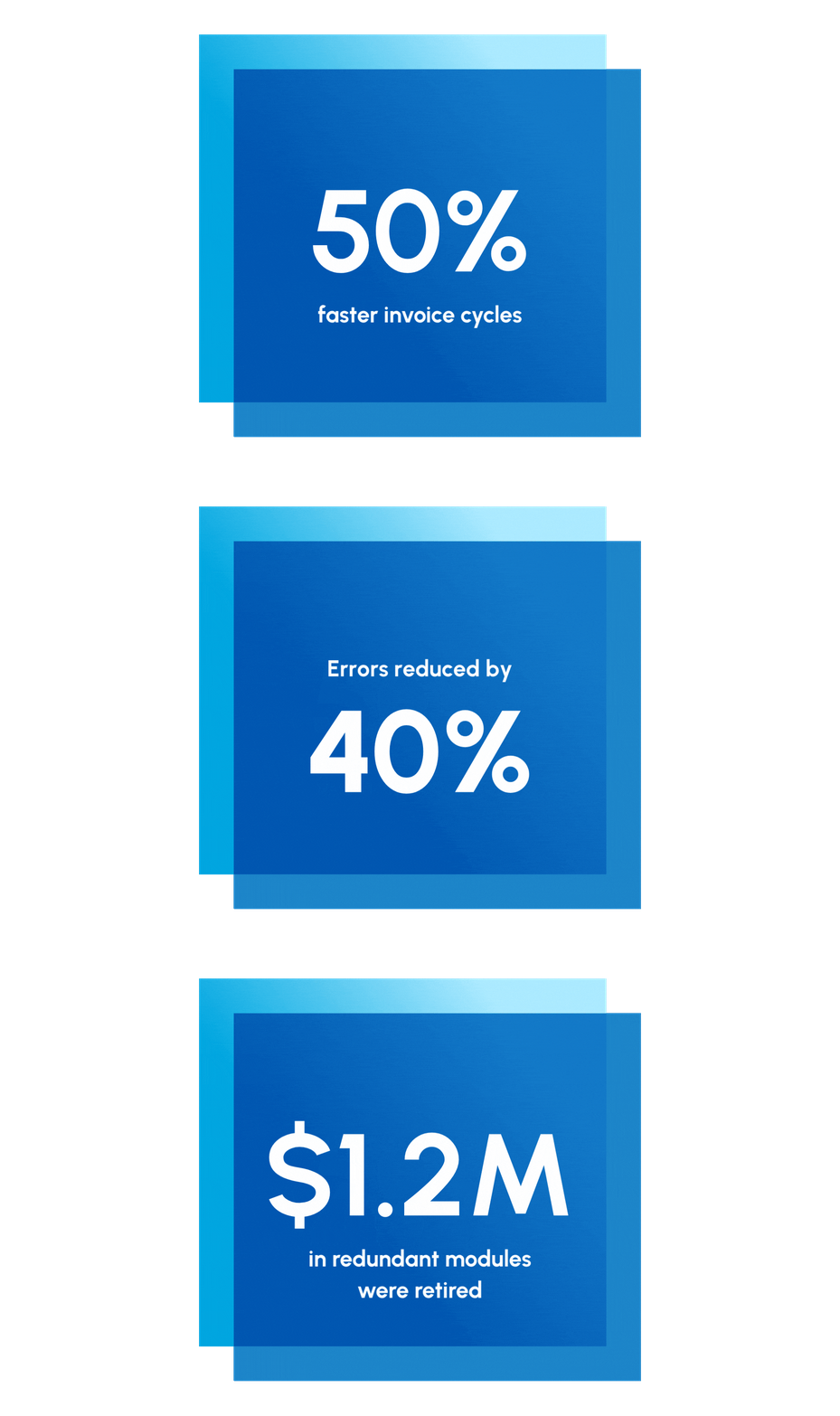
- $1.2M in redundant digital modules were retired
Operational performance improved dramatically:
- Invoice cycles became 50% faster
- Processing errors dropped by 40%
- Overall digital investment delivered a 1.8× ROI uplift
With clear insight into system usage, the company improved its digital maturity while simplifying its technology environment.
FAQ’s
How can organisations measure the ROI of digital transformation initiatives?
Measuring digital transformation ROI requires understanding how technology investments impact operational performance, productivity, process efficiency, compliance, and business outcomes. FUTUROOT measures ROI by analysing real process execution data across ERP, SaaS, procurement, finance, warehouse, and operational systems, providing objective evidence of value creation.
What is the best way to prove ROI on enterprise digital transformation projects?
The most effective approach is to compare actual business outcomes against investment objectives using operational data. FUTUROOT provides process intelligence that quantifies improvements in cycle times, automation rates, adoption levels, compliance performance, and productivity, helping organisations prove transformation ROI with confidence.
How does FUTUROOT identify underutilised enterprise software and licences?
FUTUROOT connects directly to enterprise systems and analyses user behaviour, feature utilisation, workflow execution, and process activity. This enables organisations to identify underused software modules, redundant licences, and applications that fail to deliver expected business value.
How can organisations optimise ERP and SaaS investments?
ERP and SaaS optimisation begins with understanding how systems are actually used. FUTUROOT provides visibility into platform adoption, process performance, user engagement, and operational outcomes, helping organisations maximise value from existing technology investments before purchasing additional solutions.
How does process intelligence support digital transformation programmes?
Process intelligence reveals how work flows across systems, teams, and departments. FUTUROOT helps organisations understand whether digital investments are improving operational performance, reducing inefficiencies, and supporting transformation goals through measurable business outcomes.
How can organisations rationalise complex enterprise technology stacks?
Technology rationalisation requires visibility into overlapping capabilities, duplicate applications, and underutilised platforms. FUTUROOT analyses process execution across the technology landscape, helping organisations identify consolidation opportunities and reduce unnecessary software spend.
Can FUTUROOT help build business cases for automation initiatives?
Yes. FUTUROOT identifies automation opportunities by analysing repetitive activities, manual effort, bottlenecks, error rates, and process inefficiencies. This allows organisations to build data-driven automation business cases with clear ROI projections and measurable performance targets.
How can organisations improve warehouse platform adoption and performance?
Warehouse technology often fails to deliver expected ROI because of poor adoption, process workarounds, and inconsistent usage. FUTUROOT measures platform utilisation, operational performance, workflow compliance, and user behaviour, helping organisations maximise warehouse technology investments.
What business outcomes indicate successful digital transformation?
Common indicators include improved productivity, faster process cycle times, higher automation rates, reduced operational costs, increased compliance, stronger customer outcomes, and better utilisation of technology investments. FUTUROOT continuously tracks these outcomes using real-time process intelligence.
Why do some digital transformation initiatives fail to deliver ROI?
Many transformation programmes focus on technology deployment rather than business outcomes. Poor adoption, inefficient processes, fragmented systems, and limited visibility often prevent expected benefits from being realised. FUTUROOT helps organisations identify and address these issues before they erode transformation value.
How quickly can organisations identify ROI improvement opportunities with FUTUROOT?
Unlike traditional consulting-led reviews that can take months, FUTUROOT uses process intelligence and event log analysis to identify ROI opportunities within weeks. Organisations can quickly uncover adoption gaps, underutilised systems, automation opportunities, and process inefficiencies that directly impact business value.
How is FUTUROOT different from traditional digital transformation consulting?
Traditional transformation consulting relies on stakeholder interviews, surveys, and usage assumptions to assess digital ROI — methods that capture what people remember, not what actually happened. FUTUROOT connects directly to platform event logs and reveals operational reality: a Fortune 500 life sciences company operating across 150+ countries discovered 42% of its licensed features were underused — a finding no workshop would have surfaced. FUTUROOT replaces assumption-driven reviews with evidence-based certainty, delivered in weeks rather than months.